


Playwright: A Complete Guide to Modern End-to-End Testing
Playwright: A Complete Guide to Modern End-to-End Testing A practical overview of what Playwright is, why it matters, how it compares to other tools, and how to use it effectively in real projects. What Is Playwright? Playwright is a free, open-source browser automation tool developed by Microsoft. It enables developers and testers to write reliable,…
Read more
POSTED BY
Jayeesha Das

Spatial Design: Rethinking UX beyond flat screens
Introduction: Digital interfaces have always lived within rectangles. Phones, desktops, tablets, and dashboards: every experience we design is constrained by edges, grids, and fixed viewpoints. As UX designers, we’ve learned to optimize within those limits: hierarchy, spacing, contrast, and flow. At Payoda, this same design rigor extends across platforms and emerging interfaces, helping businesses translate…
Read morePOSTED BY
Jayeesha Das

Connecting to a SQL Database via Wi-Fi on Windows
Introduction: Developers, as a matter of fact, usually work with a local database of their own. There are times, however, when you would want to grant access to the database to a collaborator or test the application with a different notebook computer. A way to accomplish this seamlessly and securely is through the same Wi-Fi…
Read more
POSTED BY
Priyadharshini

AI-Powered Search in .NET with Elastic + ML.NET
Introduction: Modern digital platforms rely heavily on intelligent search to deliver precise results instantly. Traditional keyword-based search systems, however, often fail to grasp the meaning behind a user’s query. For example, a user searching for “budget-friendly noise-cancelling earbuds” may receive unrelated premium listings because the engine matches keywords rather than context. The fundamental limitation lies…
Read morePOSTED BY
Priyadharshini

Shielding Insurers: Intelligent Fraud Detection
“Every act of fraud weakens a system; every act of integrity strengthens it.” Introduction: Fraud is any intentional act of deception carried out to gain an unfair or unlawful advantage. In industries such as insurance, banking, and financial services, where organizations increasingly rely on data-driven decision-making and digital workflows, detecting and preventing fraud has become…
Read morePOSTED BY
Priyadharshini

Flutter Monorepo Mastery: Streamline Your Multi-Project Development
Introduction: Managing shared components, design systems, and business logic is one of the most challenging tasks teams face when developing multiple Flutter applications. Most of the time, this leads to significant code duplication across different repositories. While it might seem manageable at first, over time it creates unnecessary complexity, slows down development, and makes maintenance…
Read morePOSTED BY
Priyadharshini
Payoda’s AI Success Formula: What Executives Need to Know in 2026
Introduction: 2026 has become the defining year for enterprise AI. For many C-suite leaders, the challenge is no longer convincing stakeholders of AI’s potential but establishing a clear and repeatable path to profitable outcomes. Despite growing investments, a surprisingly small fraction of enterprise AI initiatives reach full-scale deployment. However, to say that technology is the…
Read morePOSTED BY
Priyadharshini
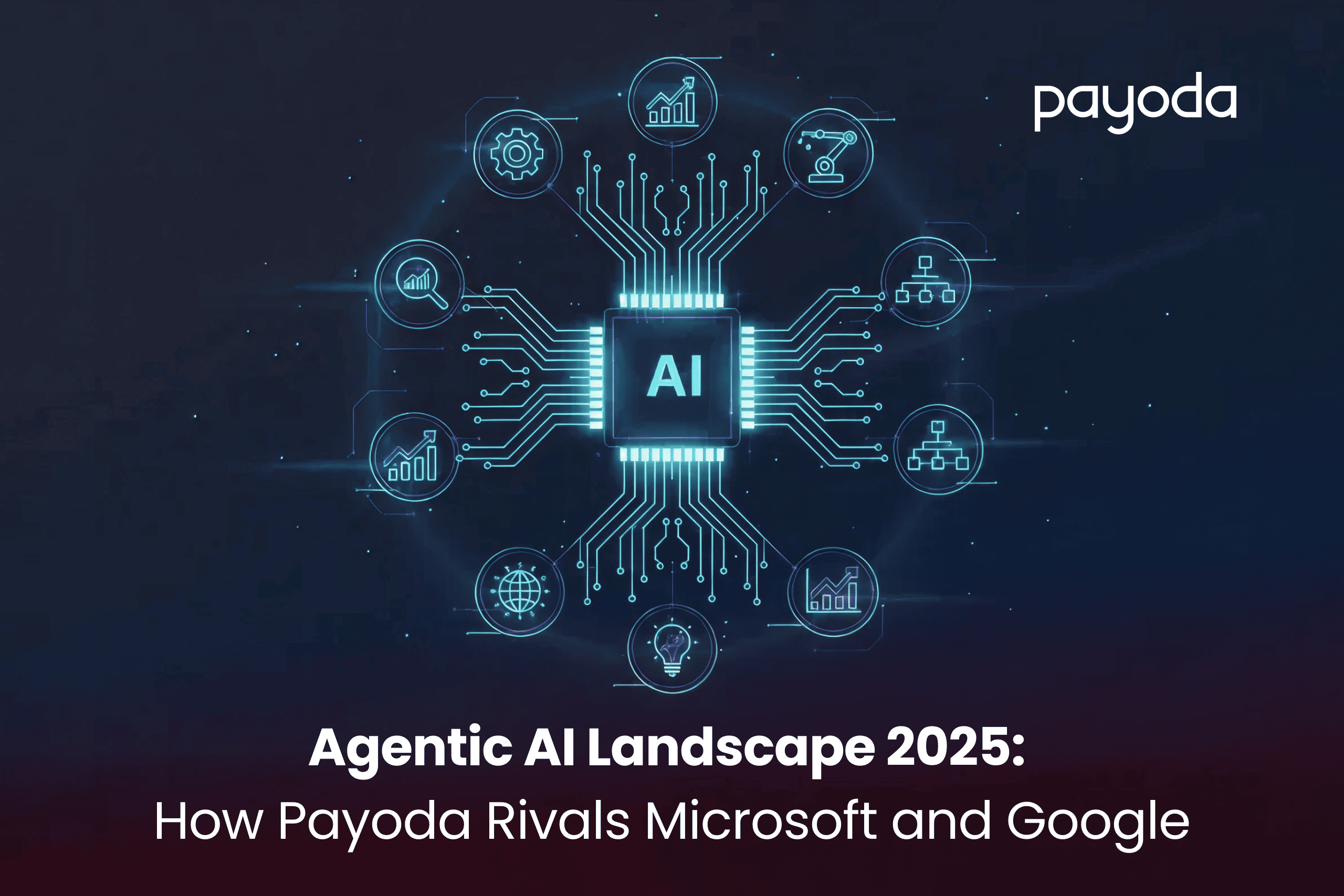
Agentic AI Landscape 2025: How Payoda Rivals Microsoft and Google
Introduction: As enterprises move toward deeper automation and autonomy, Agentic AI has become the defining force in the 2025 technology landscape. Businesses now expect AI agents to analyze, reason, plan, and execute, as they are no longer limited to predictive models or static workflows. This shift has pushed industry giants like Microsoft agentic AI and…
Read morePOSTED BY
Priyadharshini
Reactive AI vs Proactive (Agentic) AI: Architectural Differences that Matter
Introduction: Artificial intelligence has been developing quickly, but still a lot of systems function reactively and can only respond to a situation once it has occurred. This reactive AI usage has a major drawback, as it only takes the present into account and nothing else. Moreover, it is not able to predict the future and…
Read morePOSTED BY
Priyadharshini
Integrating AI into CI/CD Pipelines
Introduction: Everyone in software talks about CI/CD these days. Continuous integration and continuous delivery merge code often, run some tests, and ship updates quickly. Sounds simple, right? In reality, it’s a headache. Builds blow up for reasons you can’t predict, half the tests are flaky, pipelines take forever, and when something goes wrong in deployment,…
Read morePOSTED BY