
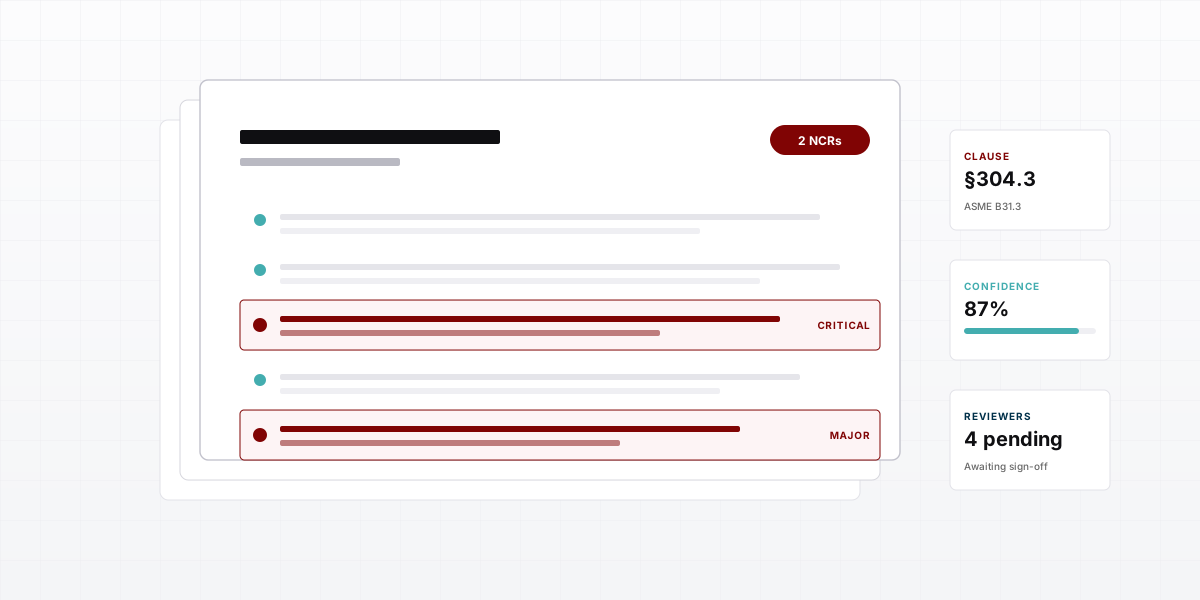
The contradiction
The design tools are modern. Document repositories are cloud-hosted. Project schedules update in real time across continents. By every visible measure, engineering has gone digital.
Then look one desk over.
A senior discipline engineer is sitting with a stack of PDFs, a printed standard, and a yellow highlighter. They're working through a 600-page specification, clause by clause. Four hours on a single datasheet. Tomorrow, another one. The same routine for eighteen months, until the project commissions.
This is engineering compliance in 2026. The most consequential checkpoint in any capital project, the one that decides what gets built and against what risk, is still done by hand.
So why hasn't it caught up?
The cost of staying manual
Two costs, one problem. The first is visible in timesheets. The second hides on dashboards no one runs.
The modernization gap nobody planned for
When enterprises wrote their digital transformation budgets, compliance rarely made the list. The money went to design automation, project controls, document management, ERP.
Compliance was treated as a downstream check. A step that would happen after the real engineering work.
That assumption created a gap.
The documents being reviewed are digital. The standards being applied are digital. But reviewing them is cognitive work the software was never built to do. Document management stores the inputs. Project tools schedule the work. Neither performs the review.
So compliance teams did what teams do when tooling falls short. They added people, built Excel checklists, and pulled senior engineers off design work to do lookup duty. The compliance workflow was never redesigned for the digital environment it now lives in.
Fragmented systems, disconnected workflows
Nothing in the enterprise stack actually owns compliance.
Engineering workflow management was built for design, procurement, and construction. It was not built to verify deliverables against a layered standards stack. So the work spreads out across systems that don't talk to each other.
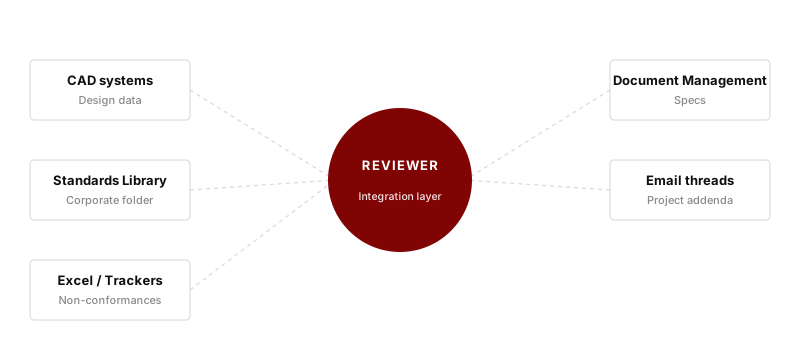
The reviewer is the integration layer.
This is not a failure of any individual tool. Document management is good at storage. ERPs handle transactions. Project tools track schedules. But compliance verification, the actual reasoning about whether a deliverable meets a standard, is not a feature of any of them. It fell between the cracks.
The visible cost is huge. The invisible cost is bigger.
Most organizations can talk about the obvious cost. Senior engineers on clerical work. Review cycles that add weeks per package. Specialists becoming bottlenecks across three projects at once. It all shows up in timesheets and schedule variance.
What rarely shows up is the second cost.
Compliance reviews don't just slow themselves down. They slow everything downstream. Procurement waits. Fabrication waits. Subsequent design assumes the current document will pass review. Sometimes it doesn't. Each delay compounds.
Then there's what slips through. 15 to 25 percent of non-conformances get missed by human reviewers working under deadline. Not because the reviewers are weak. Because no human can hold thousands of clauses, dozens of standards, and a shifting addendum hierarchy in working memory across a 250,000-document project.
The misses are structural. And misses are expensive. A single non-compliance shutdown can defer $1 to $5 million per day in production. Major incidents run into the tens of millions and up.
Governance and traceability, the quiet crisis
Some organizations resist automation because they're worried they'll lose the audit trail.
It's a fair concern. Compliance comes down to defensibility. When a regulator or PMC team asks why a finding was raised, the answer needs to trace to a specific clause, document version, and reviewer's judgment.
The first wave of compliance automation didn't earn that trust. Generic chatbots, similarity-based search, keyword-driven checklists. They surfaced plausible matches without citing the underlying clause. They couldn't tell a requirement from its negation. Compliance leaders were right to push back.
But manual review isn't actually safe just because it feels familiar. The audit trail from a stressed reviewer at the end of a cycle is only as strong as the discipline of the person assembling it. Under schedule pressure, that discipline frays. Findings get logged without complete citations. Override decisions live in inboxes.
The trail exists. It's just brittle. Compliance operations have been quietly accumulating governance debt for years.
What intelligent compliance operations look like
The future of engineering compliance isn't about replacing reviewers. It's about restructuring the work so human judgment goes where it matters, and machine reasoning handles the parts that shouldn't have been human work in the first place.
A new generation of platforms is starting to show what this looks like. Three properties separate them from earlier compliance automation attempts.
Reasoning replaces similarity
The system parses each clause as an obligation: what it requires, under what conditions, with what exceptions. That's how it catches negations, thresholds, and paraphrased requirements that keyword matching misses.
Every verdict ships with its citation
No reviewer should have to reverse-engineer where a finding came from. Every output traces back to the source clause and the source quote.
Confidence is reported separately from the verdict
Reviewers know exactly when to approve, when to escalate, and when to override. The human stays in the loop, but the loop is finally designed for them.
Operationally, that changes a lot. Review cycles compress from weeks to days. Senior engineers shift from clause-matching to engineering judgment. Compliance verification becomes consistent across projects, reviewers, and packages. Every decision, every approval, override, and rationale, is logged.
The audit trail stops being something the reviewer maintains alongside the work. It becomes a byproduct of the work itself.
A strategic moment for compliance leaders
Engineering quality assurance has been treated as operational for a long time. Important, but not strategic. That framing isn't holding anymore.
Capital project volumes are growing. The senior reviewer bench is not. Compliance has quietly become a constraint on enterprise throughput. The organizations that solve it first won't just save money. They'll move faster, scale with the same expert headcount, and walk into audits with a trail that holds up.
Engineering compliance has been the last major workflow in capital projects to resist automation. It won't be for much longer.
FAQs